

Independent financial technology expert spreads light on why Agentic AI Is Reshaping Credit and Liquidity Management
Հասարակություն
As "Agentic AI" prepares to reshape the finance function, the industry is grappling with a fundamental question: How do you trust a machine to make decisions about your cash flow?
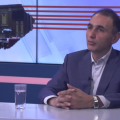
To understand what this shift means for the balance sheet, we spoke with Ara Azaryan, an independent financial technology expert whose deep understanding of complex financial operations is informed by years of leadership within Armenia's banking sector. His perspective offers a grounded look at how autonomous systems are moving from buzzword to business-critical reality in the world of credit and liquidity.
If 2023 was the year of Generative AI curiosity, 2025 is shaping up to be the year of Agentic AI accountability. For finance executives, the distinction is critical. According to Gartner, by 2028, Agentic AI will be embedded in 33% of enterprise software applications, handling 15% of day-to-day work decisions autonomously. For the leaders tasked with steering trillion-dollar payment flows and managing liquidity risk, the arrival of "agents" that can act without permission is both a tantalizing opportunity and a challenge to governance.
To understand the stakes, one must first understand what makes this technology different. As Independent Financial Technology Expert Ara Azaryan explains, drawing on his years navigating the high-stakes financial environments of major Armenian banks, Agentic AI represents a fundamental shift from tool to teammate. Where traditional automation stops after executing a single command, an agent is given a goal—say, "reconcile these payments" or "assess this customer's credit risk"—and then figures out the path to get there. It pulls data from an ERP, checks it against bank statements, identifies exceptions and anomalies, and if it hits a roadblock, it either adapts or knows which human to alert.
Azaryan notes that this autonomy is not magic, but architecture. The process is methodical: an agent receives a task, interprets the intent, integrates contextual data from sources ranging from market feeds to internal transaction histories, executes the task, and crucially, learns from the outcome. It is this feedback loop that he identifies as the true gamechanger. Unlike a static rule in an ERP that applies the same logic every time, an AI agent that successfully resolves a disputed invoice or correctly flags a deteriorating credit profile remembers how it did it. It gets smarter. It evolves. Over time, its decisions become more nuanced and more accurate, reflecting the unique patterns of the business it serves.
While a single agent can automate a specific task like cash application, the real power—and complexity—emerges when these digital workers begin coordinating with one another. In a
multi-agent system, specialization is key. Azaryan paints a picture of how this might look in a high-volume collections department. An account monitoring agent that never sleeps continuously scans aging reports and payment behaviors. When it flags a high-risk invoice—perhaps from a customer showing signs of distress or a pattern of late payments—that trigger automatically engages a customer engagement agent, which drafts and sends a personalized reminder based on that client's historical payment patterns and relationship tier. If the customer pushes back with a dispute over charges or deductions, a third agent—a dispute resolution specialist—immediately dives into the contract, delivery logs, and historical correspondence to validate the claim and propose a resolution. The entire chain reaction happens without a single human keystroke. Azaryan likens it to having a fully staffed back office that operates in milliseconds, but he is careful to note that it all functions under human-defined guardrails. Leaders set the boundaries—credit limits, risk tolerances, escalation protocols—and the agents navigate within them.
For the C-suite, the promise of Agentic AI is not about abstract technological advancement; it is about working capital. The most immediate impact is expected in the Order-to-Cash (O2C) cycle, the very bloodstream of a corporation. Azaryan points to three areas where agents are already moving from pilot to production, delivering measurable improvements in cash flow and risk management.
First, in dynamic credit risk, the transformation is profound. Instead of conducting monthly or quarterly credit reviews based on static data, agents continuously monitor a customer's payment patterns, macroeconomic news, industry trends, and transaction history. If a long-standing client begins showing signs of strain—perhaps paying invoices three days later than usual or reducing order volumes—the agent flags this shift in real-time and can dynamically adjust credit limits or recommend revised payment terms before a significant exposure accumulates.
Second, in intelligent collections, agents prioritize outreach based on the statistical likelihood of recovery, not merely the age of the invoice. They analyze customer behavior, payment histories, and even external economic indicators to determine which accounts warrant immediate attention and which can be safely allowed to ride. Routine follow-ups are automated entirely, freeing senior collectors to focus on complex negotiations and high-value relationships where human judgment is essential.
Third, in autonomous cash application, agents tackle one of the most persistent sources of inefficiency in corporate finance. By learning from past exceptions and matches, they can apply payments to open invoices with increasing accuracy, even when remittance data is fragmented, incomplete, or arriving through disparate channels. The agent identifies patterns in how customers pay, reconciles discrepancies, and reduces the manual effort required to close the books each day.
The efficiency gains are substantial, Azaryan observes, but the strategic value lies in what those gains enable. When finance teams are no longer consumed by manual reconciliation, spreadsheet maintenance, and exception chasing, they can redirect their attention to forecasting, scenario planning, and strategic initiatives that directly support business growth. The finance function is elevated from transaction processor to strategic partner.
However, Azaryan cautions that deploying Agentic AI in credit and financial operations is not a matter of simply acquiring software and flipping a switch. It demands a fundamental rethinking
of data infrastructure, governance protocols, and the nature of trust between humans and machines. He draws an analogy to the human workforce: no responsible manager would allow a junior analyst to make unsupervised decisions affecting customer credit or cash flow on their first day. They are trained, monitored, provided feedback, and gradually given greater autonomy as they demonstrate competence. The same discipline must apply to AI agents. Finance leaders must become orchestrators. They must define clear objectives, establish audit trails, monitor outcomes against expectations, and create frameworks that allow autonomous systems to operate safely within established boundaries.
For an industry built on precision, control, and regulatory compliance, ceding some decision-making autonomy to software represents a cultural leap. Errors in credit judgments or cash application can have immediate and tangible consequences. Yet as Gartner's timeline makes clear, the leap is inevitable. The competitive advantage will accrue to those organizations that learn to deploy these capabilities effectively while managing the associated risks.
Agentic AI is not coming; it is here. The question for finance leaders is no longer whether they will integrate autonomous agents into their financial technology stack, but how quickly they can build the trust, talent, and infrastructure to do so effectively. The future belongs to those who can manage machines as skillfully as they manage the people, and who recognize that in the world of finance, intelligent automation is not a replacement for human judgment but its most powerful amplifier.
BY Hasmik Saribekyan